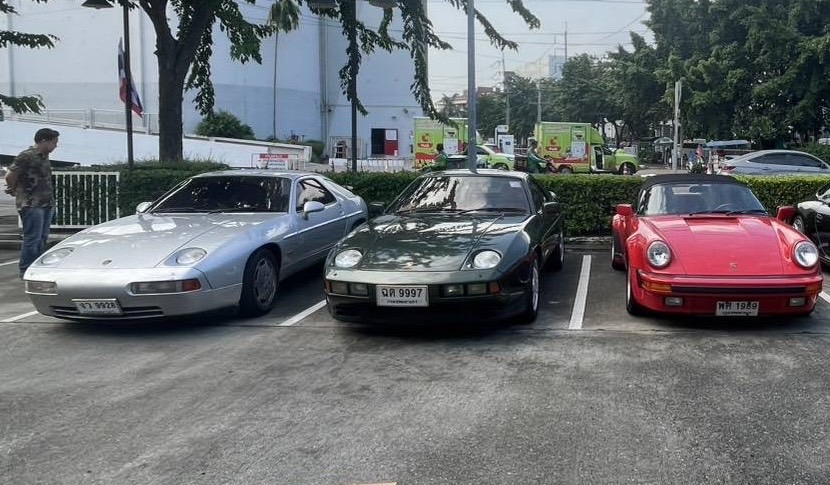
his is something enthusiasts debate a lot when comparing early Porsche 928 (K-Jetronic) vs later 928 (L-Jetronic, LH-Jetronic, or Motronic) fuel injection systems.
Let’s break it down clearly 👇
🧩 Overview
| Era | Model Years | Fuel System | Engine sizes |
|---|---|---|---|
| Early 928 (K-Jetronic) | 1978–1983 | Bosch K-Jetronic (CIS – Continuous Injection System) | 4.5 L → 4.7 L |
| Mid / Late 928 (L-Jet / LH / Motronic) | 1984–1995 | Bosch L-Jetronic / LH-Jetronic / Motronic (electronic injection) | 5.0 L → 5.4 L |
⚙️ 1. Early K-Jetronic (Mechanical CIS)
✅ Advantages
- Simple, mechanical reliability – no ECU needed; works off fuel pressure and airflow plate.
- Smooth idle and throttle response when correctly tuned.
- Robust under stable conditions – less dependent on sensors or wiring (good for long storage cars).
- Classic character – feels “old school,” with a raw mechanical feel that some collectors love.
- Easier to understand for traditional mechanics familiar with CIS (used on 911SC, VW, Mercedes of the era).
❌ Disadvantages
- Harder cold start tuning – relies on warm-up regulator and thermo-time switch; can be tricky to dial in.
- Less adaptable – can’t easily compensate for altitude, mods, or wear (no electronic feedback).
- Fuel distributors and WURs (warm-up regulators) can gum up or corrode if car sits.
- Lower fuel economy and emissions by modern standards.
- Limited performance potential unless converted or re-calibrated precisely.
⚡ 2. Late LH-Jetronic / Motronic (Electronic Injection)
✅ Advantages
- Fully electronic control → smoother fueling, better cold starts, consistent idle.
- Better performance and efficiency (especially in 5.0 L/5.4 L engines).
- Self-adjusts to temperature, altitude, and minor wear.
- Easier to tune with modern tools — you can read faults and sensors.
- Aftermarket ECU upgrades possible, improving driveability and power.
- Works better with modern fuels (especially ethanol blends).
❌ Disadvantages
- More complex wiring and sensors → more potential electrical failures as the car ages.
- Troubleshooting requires diagnostic knowledge or special tools (no simple “turn a screw” like CIS).
- ECU aging (capacitor failures, sensor drift).
- Some feel it loses the raw, mechanical feel of the early 928.
- More expensive to replace components like MAF sensors or ECUs.